Technology
Hybrid stimulation.
Personalized neurorehabilitation.
CERVA is being developed as a non-invasive hybrid neurostimulation platform combining electrical and mechanical stimulation with physiological monitoring and adaptive algorithms.
The objective is to move beyond conventional fixed-parameter stimulation toward personalized neuromodulation integrated with rehabilitation.
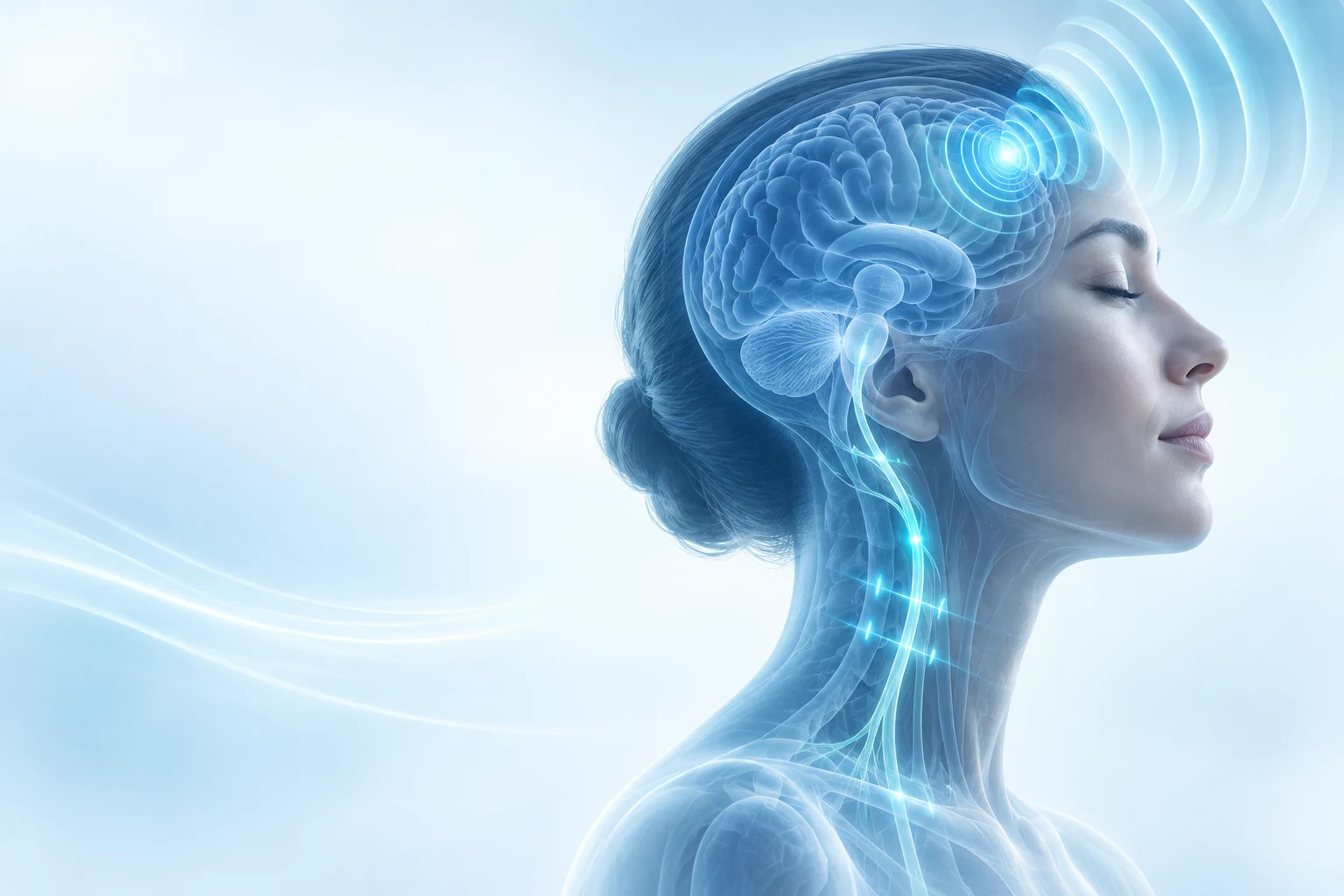
Electrical + mechanical
Two modalities. One platform.
Electrical + mechanical stimulation
Two stimulation modalities.
One integrated platform.
CERVA combines electrical stimulation with non-invasive mechanical neuromodulation to target neural structures involved in motor recovery.
Modality 01
Electrical stimulation
Electrical stimulation provides established neuromodulatory mechanisms and precise control of stimulation parameters.
Modality 02
Mechanical stimulation
Mechanical stimulation is being investigated as a complementary approach for reaching neural targets with different spatial and physiological characteristics.
The integrated platform is designed to adapt the modality, intensity, timing and target according to the therapeutic strategy.
Why hybrid stimulation?
Designed around the rehabilitation journey.
Six principles guide the way stimulation is brought together with treatment.
Non-invasive
No implanted electrodes or surgical procedure.
Multi-target
Designed to address cervical vagal pathways and cortical motor networks.
Multimodal
Electrical and mechanical stimulation can be delivered independently or in combination.
Targeted
Mechanical stimulation offers the potential for more focal and deeper modulation than conventional surface electrical stimulation.
Paired with rehabilitation
Stimulation can be synchronized with specific movements and therapeutic exercises.
Flexible
Stimulation parameters can be adapted to the patient, task and stage of recovery.
Monitoring
From stimulation to responsive neuromodulation.
Integrated sensors can capture physiological and behavioral information during treatment, including PPG/heart-rate dynamics, HRV and movement-related signals.
These data provide information about the patient’s physiological response and rehabilitation performance, creating the basis for objective treatment monitoring rather than relying exclusively on predefined stimulation protocols.
Personalized algorithms
The right stimulation.
At the right time.
For each patient.
CERVA’s algorithms are being designed to integrate stimulation parameters, physiological signals and rehabilitation performance to progressively personalize treatment.
The platform could adapt variables such as stimulation intensity, modality, timing, target and pairing with specific rehabilitation exercises according to individual responses.
The long-term objective is a closed-loop neurorehabilitation platform capable of learning from each treatment session and supporting increasingly personalized stimulation strategies.
One integrated platform
Hybrid. Responsive. Personalized.
stimulation
monitoring
algorithms
One platform designed to make neurostimulation part of personalized neurorehabilitation.