Clinical
From neurotechnology to clinical recovery
CERVA is being developed as a non-invasive neuromodulation platform for neurorehabilitation, designed to complement conventional rehabilitation by pairing targeted stimulation with therapeutic exercises.
Our initial clinical development is focused on upper-limb motor recovery, where activity-dependent neuroplasticity plays a fundamental role in relearning movement and recovering function.
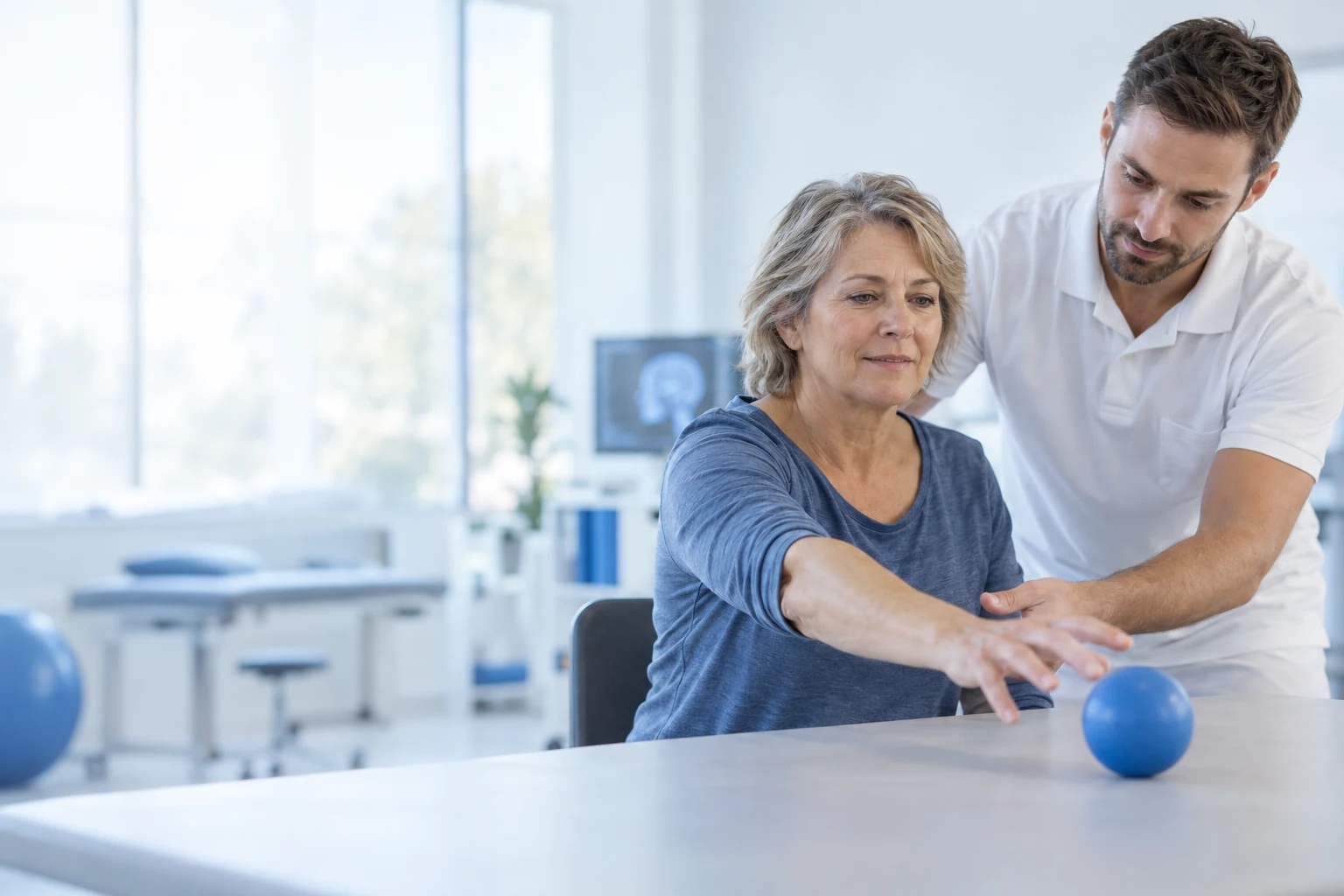
Our first clinical focus
Upper-limb
neurorehabilitation
Motor recovery through targeted stimulation paired with therapeutic movement.
Upper-limb neurorehabilitation
Our first clinical focus
CERVA combines vagus nerve and motor cortex neuromodulation with rehabilitation exercises, with the objective of reinforcing the neural activity associated with specific movements.
Vagus nerve
Neuromodulation
Motor cortex
Targeted stimulation
Therapeutic exercises
Specific movements
The platform is being designed for integration into existing rehabilitation workflows and potentially with robotic, digital and software-based rehabilitation systems.
Potential applications
Exploring where neuroplasticity may matter
The underlying technology could provide a platform for investigating neuromodulation across several neurological and neuropsychiatric conditions in which neural plasticity and network modulation may be therapeutically relevant.
Stroke rehabilitation
Traumatic brain injury
Spinal cord injury
Other motor impairments
Chronic pain
Depression and anxiety
Post-traumatic stress disorder
Sleep disorders
Addiction
Each potential indication would require dedicated scientific validation, clinical investigation and the applicable regulatory authorization.
Beyond a single indication
One platform.
Multiple possibilities.
CERVA’s combination of electrical and mechanical stimulation, multiple neural targets, physiological monitoring and adaptive algorithms creates a technology platform that could potentially be configured for different therapeutic applications.
Our development strategy starts with motor neurorehabilitation and is designed to progressively explore additional applications supported by scientific and clinical evidence.
Initial focus
Motor neurorehabilitation
Upper-limb motor recovery
Explore
Additional applications
Potential neurological and neuropsychiatric indications
Advance with evidence
Scientific and clinical validation
With applicable regulatory authorization
Investigational technology
CERVA is an investigational technology under development. Clinical efficacy and safety for the applications described have not yet been established.